
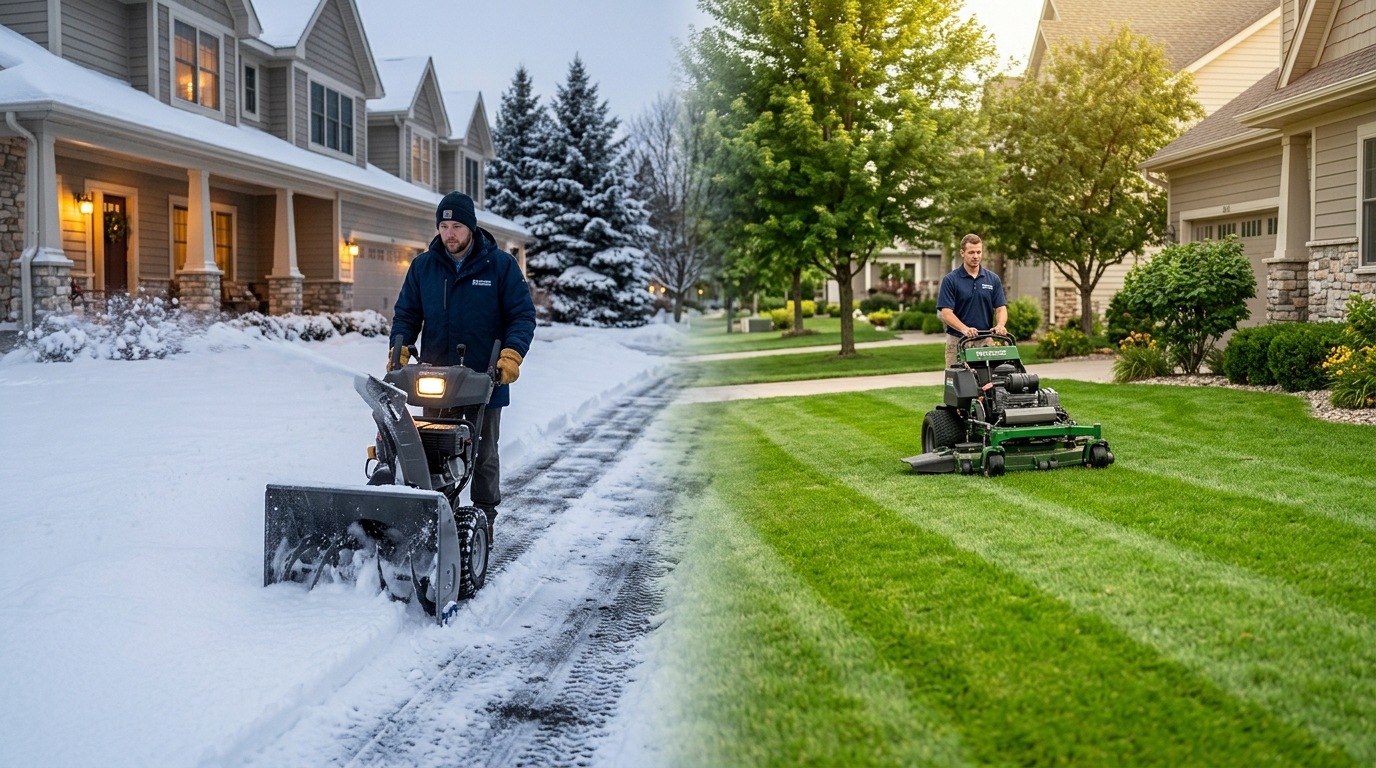
Property owners in Wisconsin face a unique operational challenge that dictates the annual cash flow and asset preservation of their portfolios. The state experiences an average of 40 to 50 inches of snowfall annually, with northern regions often exceeding 100 inches. This extreme weather variability demands a property management strategy that seamlessly integrates winter maintenance with summer landscape care. According to the National Weather Service, Wisconsin ranks among the top five states for winter storm frequency, making reliable vendor selection critical for tenant retention and asset value. (Contact Us)
Understanding Wisconsin Weather Impact
The dichotomy of Wisconsin seasons creates a bifurcated maintenance schedule. Winter requires aggressive snow removal to prevent slip-and-fall liabilities, while summer demands consistent lawn care to maintain curb appeal. Property managers must coordinate these services to avoid gaps in coverage that can lead to property damage or tenant dissatisfaction.
Snow removal is not merely a convenience; it is a legal and safety imperative. Municipalities in cities like Milwaukee and Madison enforce strict ordinances requiring property owners to clear sidewalks within specific timeframes after snowfall events. Failure to comply can result in significant fines. Furthermore, ice accumulation on driveways and common areas poses a severe liability risk. Proper salting and de-icing protocols are essential components of a robust winter maintenance plan.
Conversely, lawn care in Wisconsin involves managing rapid spring growth, summer drought resistance, and fall aeration. The soil composition varies across the state, influencing grass types and fertilizer needs. A comprehensive lawn care program includes core aeration, overseeding, and seasonal weed control. These services ensure the landscape remains healthy and visually appealing, directly impacting property valuation and rental rates.
Service Models Compared
When evaluating property management companies, it is crucial to understand the different service models available. Most firms offer three primary approaches to snow and lawn care: in-house teams, contracted third-party vendors, and hybrid models.
In-house teams provide direct control over service quality and scheduling. This model allows for immediate response to weather events, which is critical during heavy snowstorms. However, maintaining a dedicated fleet of plows and landscaping equipment requires significant capital investment and specialized labor. Companies utilizing in-house teams often charge higher management fees to cover these operational costs.
Contracted third-party vendors offer scalability and cost efficiency. These vendors specialize in either snow removal or lawn care, leveraging economies of scale to provide competitive pricing. The downside is potential coordination gaps between different vendors. For example, a snow removal contractor may not communicate effectively with a landscaping crew, leading to scheduling conflicts during seasonal transitions.
Hybrid models combine the best of both worlds. The property management company handles routine lawn care in-house while contracting specialized snow removal firms for peak winter months. This approach balances cost control with service reliability. Platinum Properties WI utilizes a hybrid approach, ensuring consistent lawn care while partnering with trusted snow removal experts to guarantee timely service during severe weather events. Learn more about our property management services to see how we integrate these models.
Vendor Selection Criteria
Selecting the right vendor requires a rigorous evaluation process. Property owners should prioritize vendors with proven track records, adequate insurance coverage, and transparent pricing structures. The following criteria are essential for making an informed decision.
Response Time and Reliability is the most critical factor in snow removal. Vendors must demonstrate the ability to clear properties within hours of snowfall cessation. Delays can lead to tenant complaints and increased liability. Check vendor references specifically for winter performance.
Insurance and Liability Coverage is non-negotiable. Vendors must carry comprehensive general liability insurance and workers' compensation coverage. This protects property owners from claims arising from accidents or property damage during service. Request certificates of insurance before signing any contracts.
Pricing Transparency ensures there are no hidden fees. Some vendors charge per inch of snow, while others offer flat-rate seasonal contracts. Flat-rate contracts provide budget certainty, while per-inch pricing may be more cost-effective in years with low snowfall. Understand the terms clearly before committing.
Technology Integration enhances service delivery. Modern vendors use GPS tracking and mobile apps to provide real-time updates on service completion. This transparency allows property managers to verify work and communicate effectively with tenants. Ask vendors about their technology stack and reporting capabilities.
Cost Analysis
Understanding the financial implications of snow and lawn care services is vital for budgeting. Costs vary based on property size, location, and service frequency. Below is a comparative analysis of typical costs in Wisconsin.
| Service Type | Average Cost Range | Billing Model | Key Considerations |
|---|---|---|---|
| Seasonal Snow Removal | $1,500 - $3,500 | Flat Rate | Includes unlimited plowing and salting |
| Per-Inch Snow Removal | $150 - $300 per inch | Variable | Costs fluctuate with weather patterns |
| Monthly Lawn Care | $150 - $400 | Subscription | Includes mowing, edging, and cleanup |
| Seasonal Landscaping | $2,000 - $5,000 | Project-Based | Includes planting, mulching, and aeration |
These figures are estimates based on industry standards for residential and small commercial properties in Wisconsin. Actual costs may vary depending on specific property requirements and vendor pricing structures. For a detailed quote tailored to your property, contact Platinum Properties WI directly.

Key Takeaways
- Wisconsin receives an average of 40 to 50 inches of snow annually, necessitating robust winter maintenance plans.
- In-house teams offer control but require significant capital investment in equipment and labor.
- Contracted vendors provide scalability but may lack coordination during seasonal transitions.
- Hybrid models balance cost efficiency with service reliability, often the optimal choice for property owners.
- Response time is the critical metric for snow removal vendors, directly impacting tenant satisfaction and liability.
- Transparent pricing models, such as flat-rate contracts, help budget owners manage unpredictable weather costs.
- Technology integration, including GPS tracking, enhances transparency and accountability in service delivery.
Frequently Asked Questions
How often should lawn care be performed in Wisconsin?
Lawn care should typically be performed weekly during the growing season, from May through September. This frequency ensures consistent growth control and weed prevention. Seasonal services like aeration and overseeding are performed annually in the fall.
What is the best snow removal pricing model?
Flat-rate seasonal contracts are generally the best option for budget certainty. They protect property owners from the financial impact of heavy snow years. Per-inch pricing may be cheaper in low-snow years but carries higher risk during severe winters.
Do property management companies handle snow removal?
Many property management companies coordinate snow removal but do not perform it in-house. They act as project managers, hiring specialized vendors to ensure timely service. This allows them to focus on property oversight while leveraging vendor expertise.
How does snow removal affect tenant retention?
Timely snow removal is a top factor in tenant satisfaction. Delays can lead to unsafe conditions and complaints. Properties with reliable winter maintenance see higher renewal rates and fewer lease terminations due to convenience issues.
What insurance should snow removal vendors carry?
Vendors must carry general liability insurance and workers' compensation coverage. This protects property owners from claims related to property damage or employee injuries. Always request and verify certificates of insurance before hiring.
Can lawn care services prevent pest infestations?
Yes, regular lawn care can significantly reduce pest infestations. Proper mowing height, aeration, and weed control create an environment less hospitable to pests. Integrated pest management strategies are often included in comprehensive lawn care plans.
How do I choose between in-house and contracted services?
Choose in-house services for maximum control and responsiveness. Opt for contracted services for cost efficiency and scalability. Hybrid models offer a balance, allowing property managers to customize service delivery based on specific property needs and budget constraints.
Secure Your Property's Year-Round Value
Effective snow and lawn care management is not optional for Wisconsin property owners. It is a fundamental component of asset preservation and tenant satisfaction. By understanding the nuances of service models, vendor selection, and cost analysis, you can make informed decisions that protect your investment. Platinum Properties WI offers comprehensive property management solutions tailored to the unique challenges of the Wisconsin market. Our team integrates expert lawn care with reliable snow removal coordination to ensure your property remains in peak condition year-round. Visit our about page to learn more about our team's experience and commitment to excellence. Contact us today to schedule a consultation and discover how we can enhance your property's value and performance.