

Wisconsin Property Management Guide: Hiring the Right Company in 2026
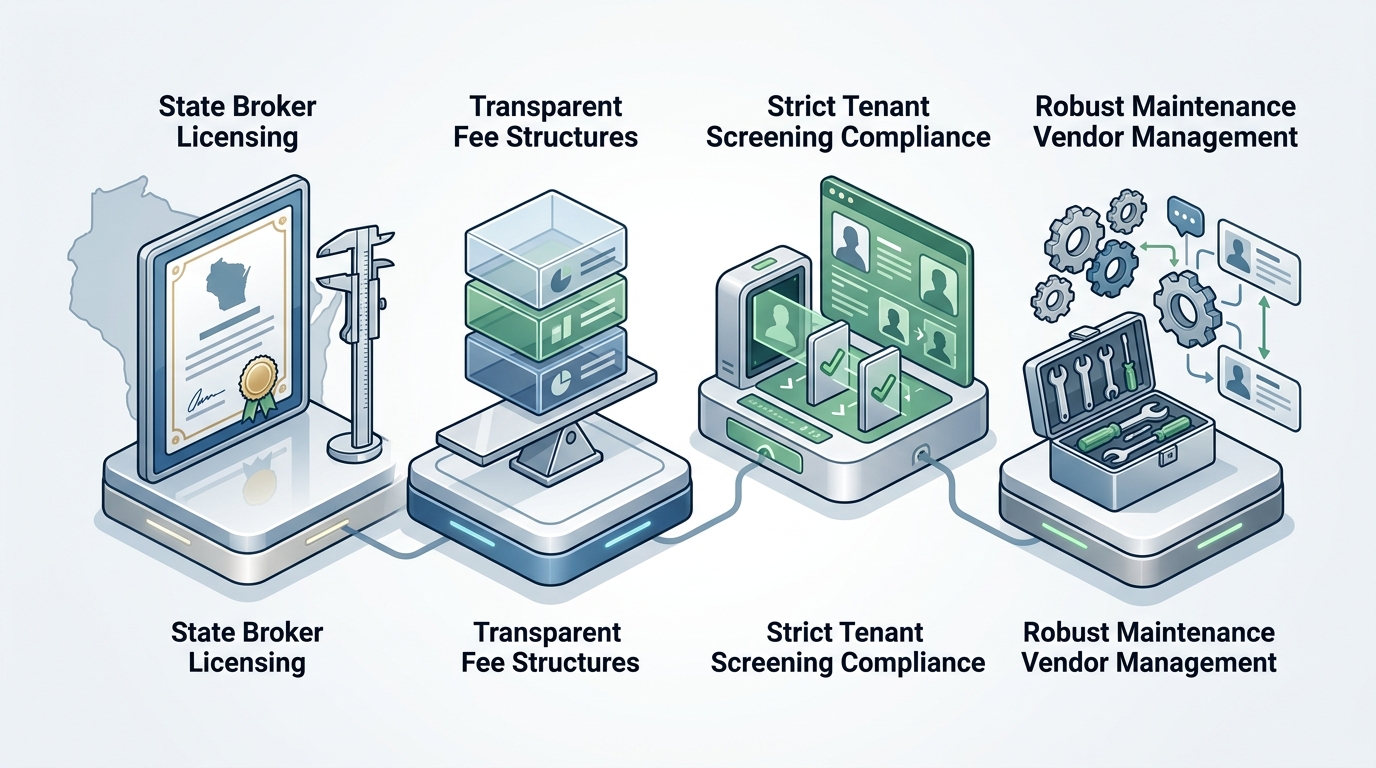
When hiring a property management company in Wisconsin, you must verify state broker licensing, demand transparent fee structures, ensure strict tenant screening compliance, and confirm robust maintenance vendor management. This guide provides a detailed framework for evaluating these four critical pillars. It helps Wisconsin property owners and investors distinguish between superficial marketing claims and operational substance. We examine the specific legal and practical requirements that protect your investment and ensure consistent cash flow.
Wisconsin Broker Licensing
Wisconsin broker licensing is the legal requirement for any individual or entity conducting real estate transactions, including property management, in the state. Under Wisconsin law, property management is considered a real estate activity. Therefore, the company managing your property must be led by a licensed real estate broker. This is not a suggestion; it is a statutory mandate. Operating without a license exposes the company to legal penalties and exposes you to liability.
Verifying License Status
You can verify a broker's license status through the Wisconsin Department of Financial Institutions (DFI). The DFI maintains a public database of all licensed real estate brokers and salespersons in the state. When evaluating a potential management company, ask for the name of the responsible broker. Then, cross-reference that name in the DFI database to confirm the license is active and in good standing. A reputable firm will provide this information without hesitation.
Broker vs. Manager Distinction
It is crucial to understand the difference between a licensed broker and a property manager. A property manager may be an employee of the brokerage, but the ultimate legal responsibility rests with the broker of record. Ensure the company you hire has a designated broker who oversees all management activities. This oversight ensures compliance with Wisconsin landlord-tenant laws, including proper handling of security deposits and lease agreements. Platinum Property Management operates under a licensed broker and licensed general contractor, providing a dual layer of professional oversight for your investment.
Fee Structure Transparency
Fee structure transparency is the practice of clearly disclosing all costs associated with property management before signing a contract. Hidden fees are a common source of conflict between owners and managers. A transparent fee structure allows you to accurately calculate your net operating income. It ensures that the management fee is the only variable cost you need to monitor on a monthly basis.
Standard Management Fees
Most property management companies in Wisconsin charge a monthly fee based on a percentage of the gross rent collected. This fee typically ranges from 8% to 10% for single-family homes and may vary for multi-family properties. The fee should cover leasing, rent collection, tenant communication, and routine maintenance coordination. Ask specifically what is included in this percentage. Does it include lease renewals? Does it include annual inspections? Clarity here prevents surprise invoices later.
Additional Service Charges
Beyond the base management fee, you should expect to pay for specific services. These often include initial leasing fees, eviction processing fees, and late payment fees. A transparent company will provide a written schedule of these additional charges. They should also clarify how they handle maintenance markups. Some companies add a markup to vendor invoices, while others pass the cost through at cost. Understanding this distinction is vital for budgeting. Investor-focused resources often highlight the importance of negotiating these terms to maximize return on investment.
Tenant Screening Compliance
Tenant screening compliance is the process of evaluating prospective renters against legal and financial standards to minimize risk. In Wisconsin, landlords must adhere to the Fair Housing Act and state-specific laws regarding tenant selection. A compliant screening process protects you from discriminatory practices and ensures you select reliable tenants who will care for your property.
Core Screening Components
A robust screening process includes credit checks, criminal background checks, and rental history verification. It also involves income verification to ensure the tenant can afford the rent. The company should use a standardized criteria for all applicants to avoid claims of discrimination. They should provide you with a clear report of the findings. This report should highlight any red flags, such as prior evictions or significant credit issues, allowing you to make an informed decision.
Legal Safeguards
Compliance extends beyond the initial screening. It includes proper handling of personal information and adherence to data privacy laws. The management company should have a secure system for storing tenant documents. They should also be knowledgeable about Wisconsin's specific rules regarding security deposits and lease termination. A company that treats screening as a checkbox exercise rather than a legal safeguard poses a significant risk to your asset. Professional property management services prioritize rigorous vetting to ensure long-term tenancy stability.
Maintenance Vendor Management
Maintenance vendor management is the system a property manager uses to coordinate, supervise, and document repairs. This is often the most labor-intensive aspect of property management. A strong vendor management system ensures that repairs are completed promptly, at a fair price, and to a high standard. It protects your property from neglect and prevents minor issues from becoming major damages.
In-House vs. Third-Party Vendors
Some property management companies rely entirely on third-party contractors. Others maintain in-house maintenance teams. In-house teams often provide faster response times and more consistent quality control. They can handle routine repairs without the need for scheduling delays associated with external vendors. If a company uses third-party vendors, ask about their vetting process. Do they require insurance and licensing? Do they have a preferred vendor list with negotiated rates? Transparency in this area is key to avoiding inflated repair costs.
Documentation and Communication
Comparison of Management Approaches
| Feature | Self-Management | Third-Party Vendor Model | In-House Team Model |
|---|---|---|---|
| Response Time | Variable (Owner dependent) | Slow (Scheduling delays) | Fast (Direct dispatch) |
| Cost Control | High (No markup) | Medium (Potential markup) | High (Internal labor rates) |
| Quality Consistency | Inconsistent | Variable (Vendor dependent) | High (Standardized training) |
| Documentation | Manual (Owner dependent) | Vendor provided | Systematic (Internal logs) |
Key Takeaways
- Verify that the property management company is led by a licensed Wisconsin real estate broker.
- Request a written fee schedule that details the base management percentage and all additional service charges.
- Ensure the tenant screening process includes credit, criminal, and rental history checks in compliance with Fair Housing laws.
- Ask whether the company uses in-house maintenance staff or third-party vendors, and how they document repairs.
- Confirm that the company provides regular financial reporting and access to an owner portal for real-time data.
- Check the company's reputation and experience in your specific Wisconsin market or neighborhood.
- Review the management agreement for termination clauses and notice periods before signing.
- Ensure the company has adequate insurance coverage, including liability and errors and omissions.
Frequently Asked Questions
Is property management considered a real estate activity in Wisconsin?
Yes, property management is classified as a real estate activity in Wisconsin. Therefore, the company must be licensed as a real estate broker to legally manage rental properties. This licensing ensures that the company adheres to state regulations regarding landlord-tenant relationships and financial handling.
What is the typical management fee in Wisconsin?
Typical management fees in Wisconsin range from 8% to 10% of the gross monthly rent for single-family homes. Multi-family properties may have different fee structures. It is important to clarify whether this fee includes all services or if additional charges apply for leasing, evictions, or major repairs.
How do I verify a broker's license in Wisconsin?
You can verify a broker's license through the Wisconsin Department of Financial Institutions (DFI) website. The DFI provides a public search tool where you can look up active licenses by name or company. This is a free and reliable way to confirm that a property management company is legally authorized to operate in the state.
What should be included in a tenant screening report?
A comprehensive tenant screening report should include a credit check, criminal background check, eviction history, and rental reference verification. It should also verify the applicant's income and employment status. The report should be provided to the owner for final approval, ensuring that the decision is based on objective data.
Why is in-house maintenance better than using third-party vendors?
In-house maintenance teams often provide faster response times and more consistent quality control. They are directly employed by the management company, which allows for better supervision and standardized work practices. This can lead to lower long-term costs and better protection of the property's value compared to relying on external contractors.
How often should a property manager inspect my rental property?
What is the difference between a property manager and a real estate broker?
A real estate broker is a licensed professional who can legally conduct real estate transactions, including property management. A property manager is often an employee of the brokerage who handles the day-to-day operations. The broker holds the license and bears ultimate legal responsibility, while the manager executes the tasks under the broker's supervision.
Can I fire my property management company at any time?
It depends on the terms of your management agreement. Most contracts require a notice period, typically 30 to 60 days, before termination. You should review the termination clause in your contract carefully. If the company is in breach of contract, you may have the right to terminate immediately, but this should be handled with legal advice.
Conclusion
Hiring the right property management company in Wisconsin requires due diligence and a clear understanding of legal and operational standards. By verifying broker licensing, demanding fee transparency, ensuring tenant screening compliance, and evaluating maintenance vendor management, you protect your investment and secure reliable income. Contact Platinum Property Management to discuss how their full-service approach can support your Wisconsin real estate portfolio.